by Andreas Chrysostomou – in Opinions
As the IMO’s Sub-Committee on Pollution Prevention and Response (PPR) meets for its 13th session from 9-13 February 2026, exhaust gas cleaning system (EGCS) discharges have returned to the agenda. While technical aspects of scrubber operation continue to attract attention, the more consequential issue today is procedural rather than technical, argues Andreas Chrysostomou, Executive Director, Clean Shipping Alliance.

The issue before IMO is not whether to protect the marine environment, but how to do so in a way that is scientifically sound, legally robust and globally coherent. Whatever your stance on EGCS, the outcome matters as it has the potential to affect the credibility, predictability and effectiveness of international maritime regulation.
Agenda Item 7 at PPR 13 concerns the evaluation and harmonisation of rules and guidance on EGCS discharge water, under IMO output 1.23. This work has been ongoing for several years and was extended to PPR 13 to allow further consideration of regulatory options. The remaining question is whether new regulatory measures are required, and if so, how they should be developed.
The proposal submitted to the Sub-Committee (PPR 13/7/2 (EU)) would amend Regulation 4 of MARPOL Annex VI to create a new legal pathway for restricting EGCS discharges within Particularly Sensitive Sea Areas (PSSAs). In practice, this would allow associated protective measures (APMs) to be introduced without the required relevance to the purpose for which a PSSA was designated, without completion of a PSSA-specific environmental risk and impact assessment and without prior approval by IMO, representing a significant departure from current IMO procedures for PSSAs.
Under existing PSSA Guidelines, coastal States must demonstrate area-specific vulnerability supported by scientific evidence and propose tailored protective measures that are reviewed and approved by IMO before becoming mandatory. PSSAs were not intended to provide an alternative route for regulating technologies already recognised under MARPOL Annex VI as equivalent means of compliance. Applying PSSA mechanisms in this way therefore raises legitimate questions of regulatory consistency and legal coherence under MARPOL and UNCLOS.
Why process matters at PPR 13: keeping science at the centre of regulationIMO has agreed how environmental questions should be assessed
IMO has already agreed how environmental questions relating to EGCS discharges should be assessed. The 2022 Guidelines for risk and impact assessments of EGCS discharge water (MEPC.1/Circ.899) establish two recognised methodologies: emission-factor-based assessment and whole effluent toxicity (WET) testing.
Work to develop a standardised method for calculating emission factors for use in local EGCS risk assessments is being carried out by a GESAMP Task Team, re-established following PPR 12 to provide independent scientific advice to the UN. As confirmed by the IMO Secretariat, this work has been constrained by funding limitations, and a final report is not expected before PPR 14.
To support this work, substantial data has been submitted to IMO. This includes the largest qualified EGCS discharge dataset made available for public evaluation to date, provided by Cruise Lines International Association (CLIA), comprising over 1,000 directly sourced samples from 80 ships operating globally, all analysed using ISO-accredited laboratories and IMO-aligned methods. CLIA also proposed a standard method for calculating emission factors for use with locally sourced samples (PPR 13/INF.21), following similar work submitted to IMO last year, in PPR 12/INF.11 (Norway).
In the meantime, while the GESAMP work is still in progress, WET testing remains available under existing IMO Guidelines as the alternative approved method for conducting local, area-specific risk assessments.
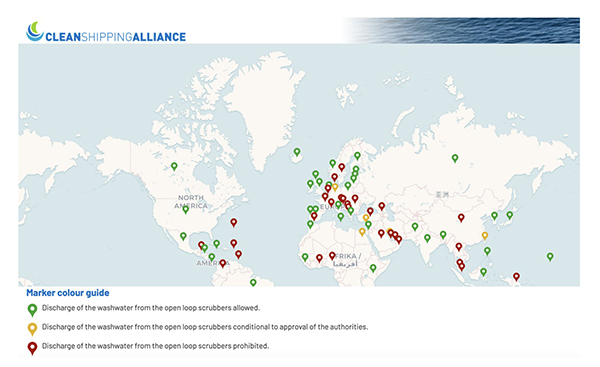
With this in mind, for locations where EGCS discharge restrictions are currently in place, there do not appear to be publicly available records of completed risk and impact assessments conducted in accordance with MEPC.1/Circ.899. This matters because the IMO framework is designed to ensure regulatory decisions are informed by completed scientific evaluation using recognised methods, rather than precaution alone. Where precautionary measures are applied, they are intended to be temporary, pending the availability of sufficient evidence.
Evidence from assessments conducted in line with IMO Guidelines
“Decades of operational experience and a substantial body of scientific literature consistently show that EGCS discharge water compliant with IMO criteria meets major national and international water quality standards.”
Multiple whole-effluent risk assessments conducted using standardised methods have found low or negligible risk to the marine environment under normal operating conditions.
A goal-based approach, adjusting discharge limits or conditions where a credible risk is demonstrated, preserves environmental protection while maintaining regulatory proportionality, flexibility, and the encouragement of technical solutions. By contrast, closing off entire technology pathways through blanket prohibitions introduced in advance of completing assessments in line with IMO Guidelines could weaken the credibility of evidence-based regulatory processes.
System-level assessments, such as Liberia’s well-to-wake life-cycle assessment submitted to IMO, further demonstrate that across most environmental impact categories the use of HFO + EGCS does not increase CO2 emissions compared with compliant low-sulphur fuels, but actually results in comparable or lower CO2-equivalent emissions.
Why process matters beyond EGCS
For shipowners operating globally, regulatory predictability and consistency are operational necessities. Fragmentation of MARPOL Annex VI implementation through unilateral or regional measures creates complexity and uncertainty while increasing compliance and safety risks without clear evidence of corresponding environmental benefit.
Several submissions to PPR 13 from flag States and international shipping organisations, including Liberia, ICS, BIMCO, CLIA, and the World Shipping Council, have raised concerns that bypassing established IMO procedures could set a precedent extending beyond EGCS. If regulatory outcomes are advanced ahead of completed scientific work, and independent of IMO decisions, confidence in IMO frameworks risks being eroded, discouraging future investment in compliance technologies and innovation.
“For fleets with long investment horizons, technologies explicitly recognised as equivalent means of compliance under MARPOL should not be rendered obsolete without a transparent, evidence-based process. Predictability and adherence to agreed procedures are essential to maintaining trust in the regulatory system.”
The choice before PPR 13 is not between environmental protection and inaction. A goal-based regulatory approach already exists. Where evidence demonstrates unacceptable risk in specific locations, targeted and proportionate measures can be developed through existing IMO mechanisms.
Completing the work of the GESAMP Task Team is therefore important. Ensuring this work is adequately funded, impartial, and methodologically robust will equip Member States with an additional approved tool for conducting risk assessments and making informed decisions.
For an industry navigating multiple regulatory transitions simultaneously, process integrity is not a technicality. It is the foundation on which credible, effective, and durable regulation is built.
The views presented are only those of the author and do not necessarily reflect those of SAFETY4SEA and are for information sharing and discussion purposes only.
Originally published at: https://safety4sea.com/why-process-matters-at-ppr-13-keeping-science-at-the-centre-of-regulation/